.jpg)
Reviewed by
First-hand Stay
First-hand Stay
Reviewed by
On-site inspection
On-site inspection
Reviewed through
Sources
Sources
Fly by light aircraft from Windhoek (or as a mid-trip hop from Damaraland/Hoanib) to Möwe Bay, the nearest airstrip, followed by a road transfer with a lodge guide to camp; alternatively transfer by road from Swakopmund (about 8 hours) or Windhoek (about 11.5 hours) in an air-conditioned 4×4, self-drivers may only go as far as Möwe Bay, where a staff member collects them.
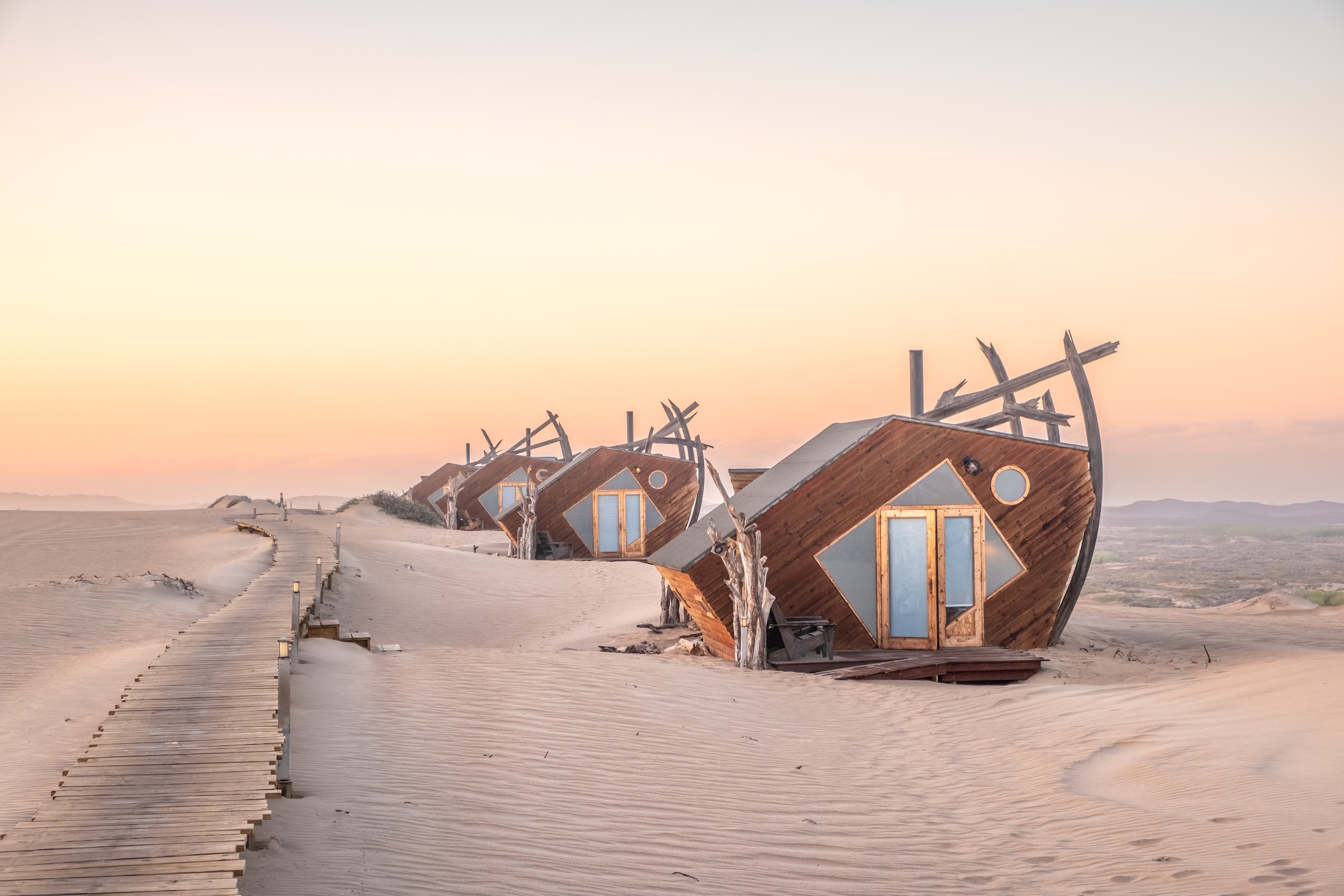
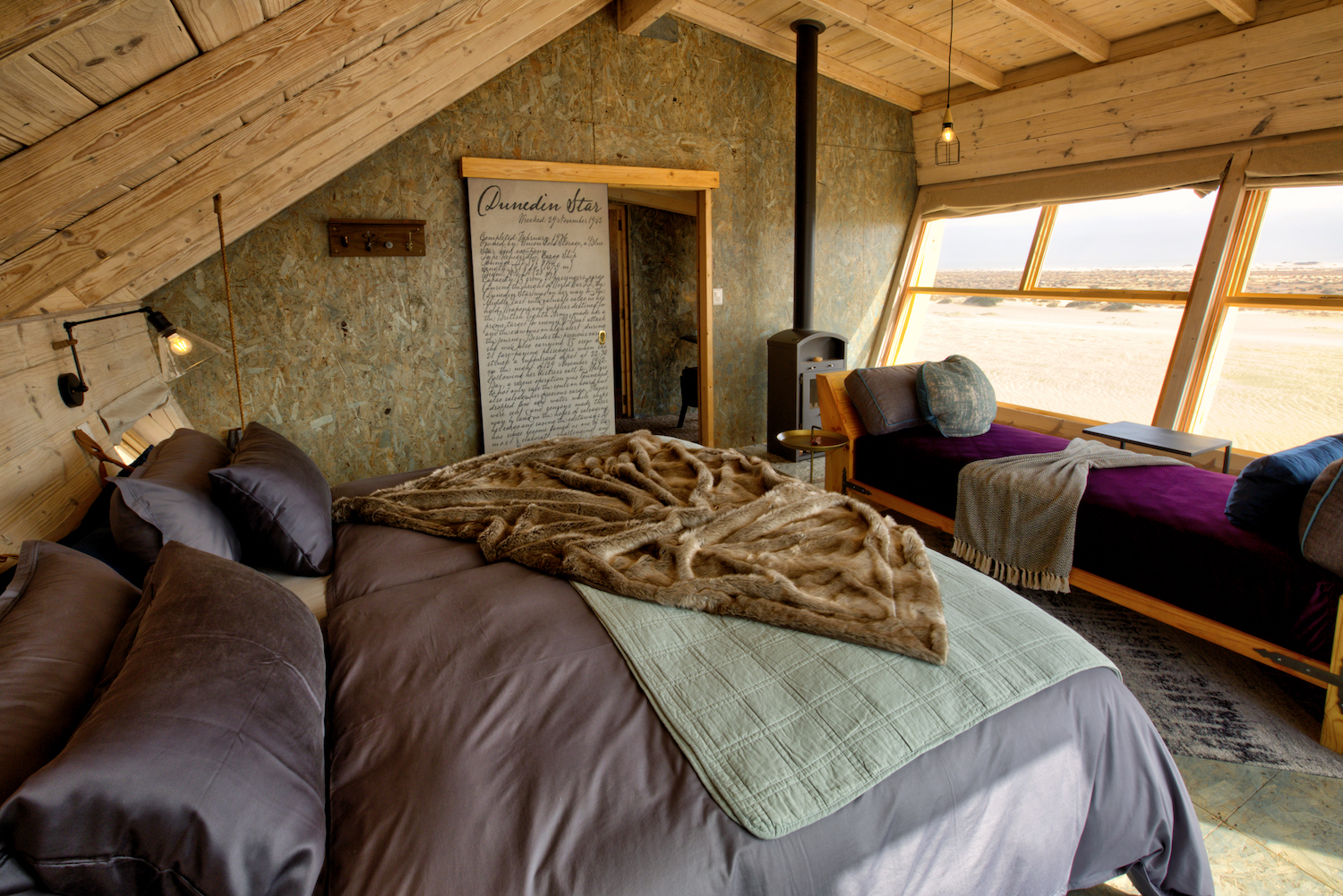
Ten cabins shaped like shipwrecks, spread along the dune so each feels solitary, all timber-and-glass with large scenic windows framing the desert and distant Atlantic, a wood-burning stove for the cold coastal nights, and a spacious, well-maintained interior that guests consistently praise. Eight are double chalets and two are family chalets. Since all face the ocean across the dunes, the pick is a chalet set furthest along the dune line for the most solitude, falling asleep to the crackle of the stove and the sound of the surf is the whole experience.
Delicious, daily-changing menus praised by guests as some of the most consistent in Namibia, served in the timber-and-glass restaurant with its deck over the dunes, plus the signature beach dining, a meal on the shores of the Atlantic surrounded by the untamed Skeleton Coast, all meals and local drinks included.
Warm layers are essential year-round, a proper windproof jacket, fleece, beanie and gloves for chilly, foggy mornings and evenings (desert temperatures swing fast), plus lighter clothing for warm days, closed shoes and a buff/scarf for wind and sand on the dunes and quad bikes, sunglasses, sun hat, high-factor sunscreen and lip balm, a headtorch, binoculars, plenty of camera gear, and a soft bag for the light aircraft, no malaria kit needed here.
The journey is part of the experience, self-drivers can only reach Möwe Bay (no self-driving is permitted within the national park), where the lodge collects you for the final stretch, so most guests fly in. Don't miss the "roaring dunes" excursion and a picnic or beach dinner on the Atlantic shore (a genuinely extraordinary setting), and time a visit around low fog for photography (mornings are clearer November–April).
As the single lodge permitted in the whole of the Skeleton Coast National Park, Shipwreck Lodge was designed for minimal environmental impact, solar-powered cabins built from timber and glass that can tread lightly on the shifting sands, where footprints simply disappear. Through the Natural Selection Foundation, guests support the operator's conservation and community work across Namibia, and the surrounding concession protects rare desert-adapted wildlife including brown hyena, elephant and one of Namibia's only viable lion populations outside Etosha.
.jpg)
.jpg)