Reviewed by
First-hand Stay
First-hand Stay
Reviewed by
On-site inspection
On-site inspection
Reviewed through
Sources
Sources
Reached by light-aircraft charter from Maun (MUB) to the Makgadikgadi airstrip (roughly 30–45 minutes), followed by a 4×4 game-drive transfer to camp, alternatively a road transfer from Maun (around 3.5 hours).
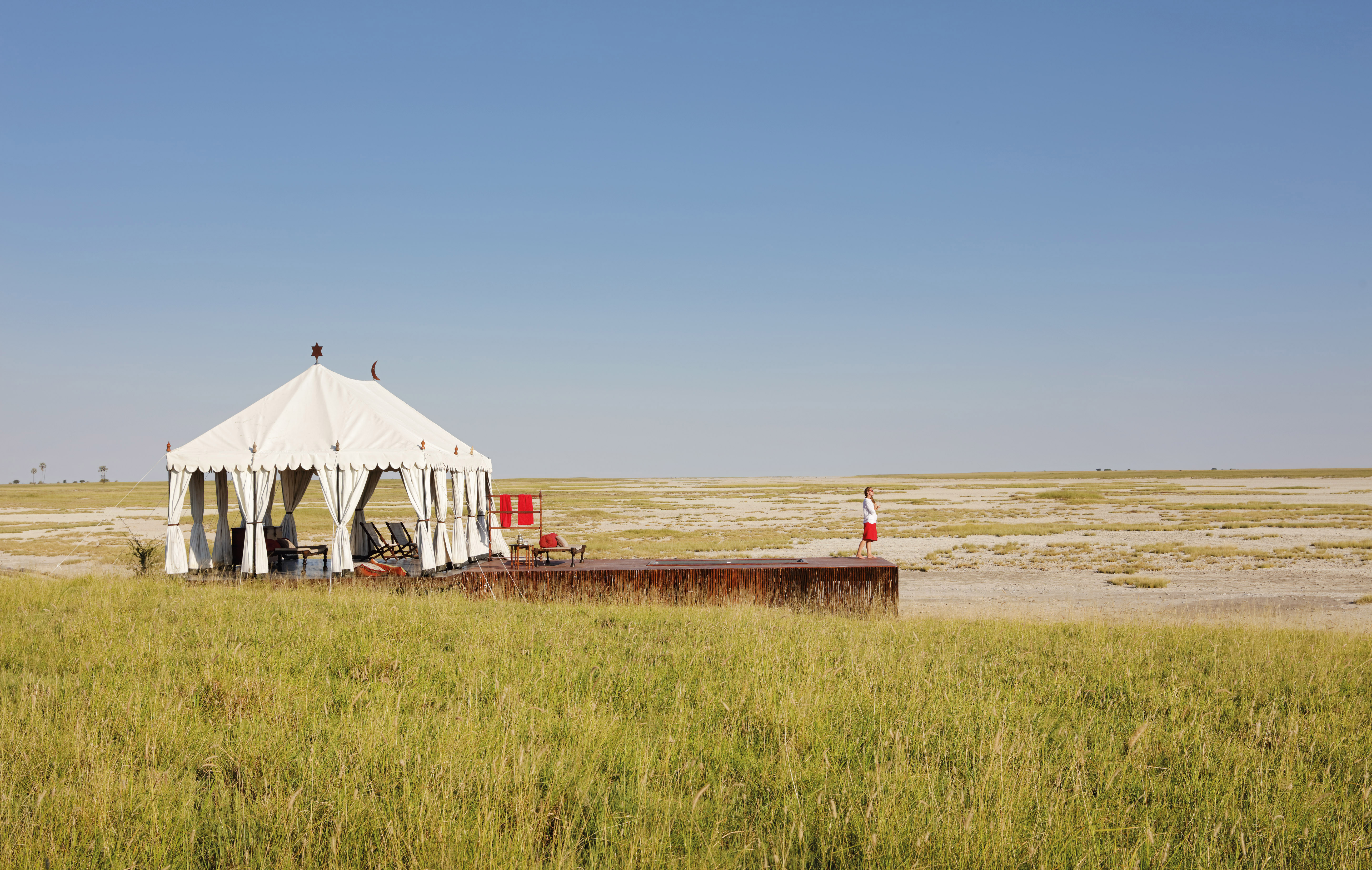
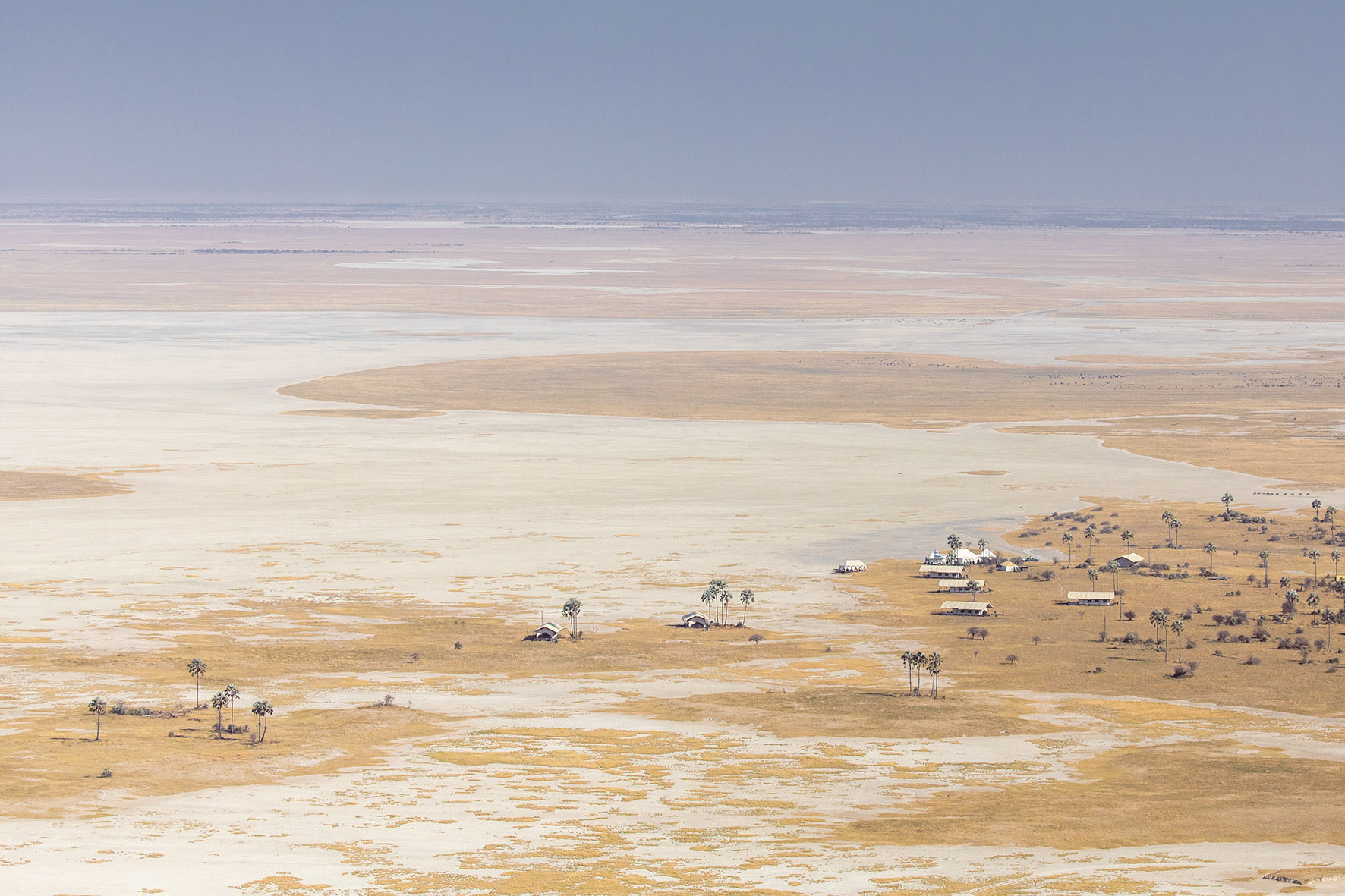
Seven classic billowing white tents, all with 360-degree views over the pans, hand-carved four-posters raised high on Persian rugs, mahogany writing desks, leather armchairs and a day bed outside for view-gazing, with ensuite flush loos and solar-heated showers. Since the tents share the same iconic style and setting, the choice is simple: couples take one of the double tents, and families take the dedicated family tent. The whole camp runs on solar power with lanterns lighting the way after dark.
Full-board and all-inclusive, with three-course feasts served communally in the splendid mess tent under white linen and crystal, a convivial style that's especially welcoming for solo travellers, plus the tea tent for some of the best brownies in the desert and bush meals out on the pans.
Neutral safari clothing with warm layers, a windproof jacket and beanie for genuinely cold desert mornings and nights (May–August), lighter clothing for hot midday, closed shoes, a buff or scarf for dust on the quad bikes, sunglasses, a sun hat and high-factor sunscreen for the fierce pan glare, lip balm, swimwear, a headtorch and binoculars, and note there are no hairdryers, plus a soft bag for the light aircraft.
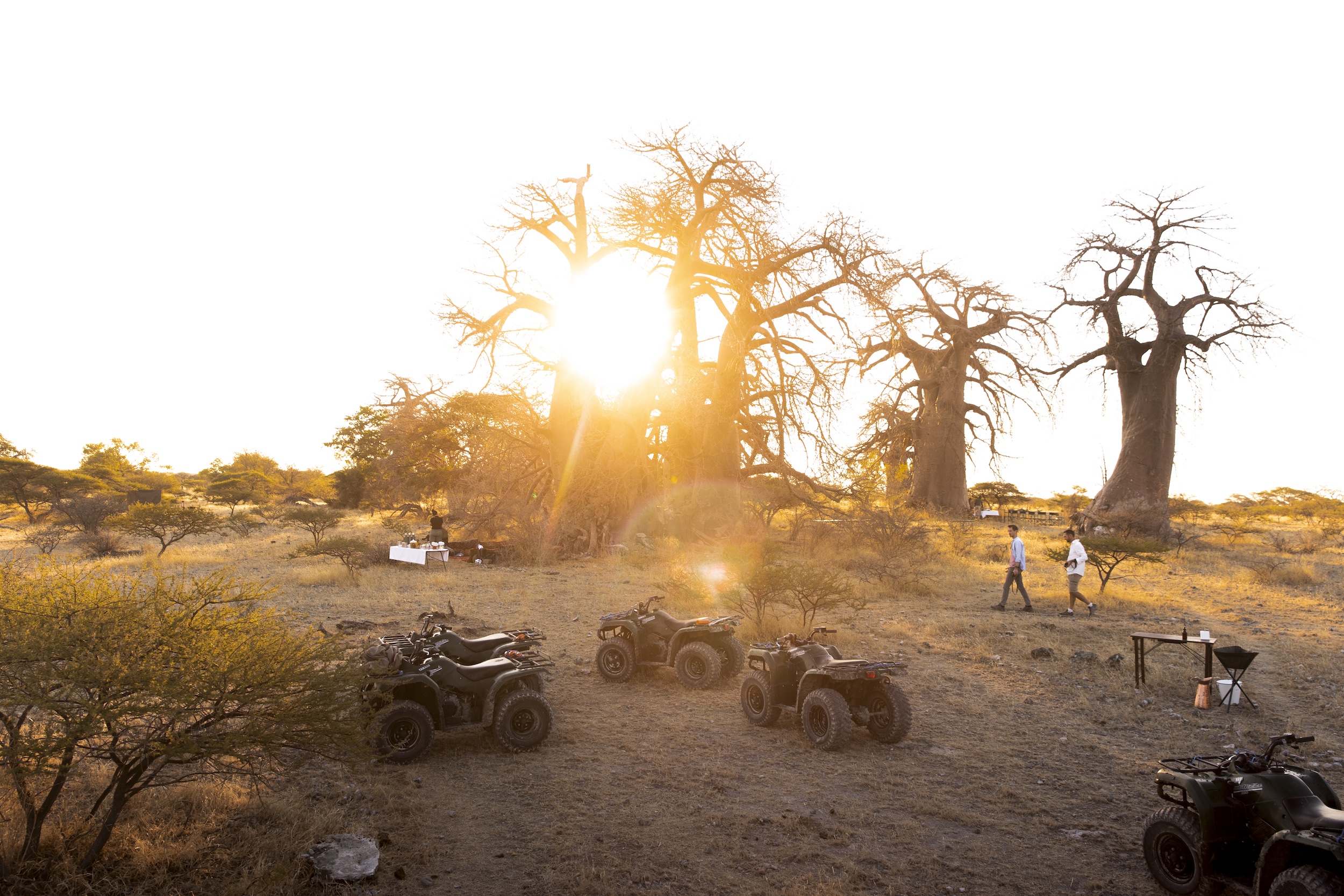
Come for the romance, the silence and the surreal landscape rather than big game, this is desert minimalism, not Big Five, the meerkat encounter and a sleep-out on the pans under the stars are the signatures, and quad biking and sleep-outs only run when the pans are dry. Time matters: the famous zebra and wildebeest migration is November–March, mostly when the camp is closed, so the open shoulder months (April and October) are your best chance of catching its movement. Sister camps Jack's Camp and Camp Kalahari share the concession and activities.
The entire camp runs on solar power with careful waste management and can be completely dismantled, leaving Ntwetwe almost exactly as it was, and the only water added comes from beneath the pans to supply low-impact waterholes. Through the Natural Selection Foundation, guests directly support the Makgadikgadi Large Mammal Migration initiative (with Round River Conservation), an aardvark research project, Elephants for Africa collaring and elephant-proof fencing, Wild Shots Outreach and wider Botswana community-and-conservation work.